
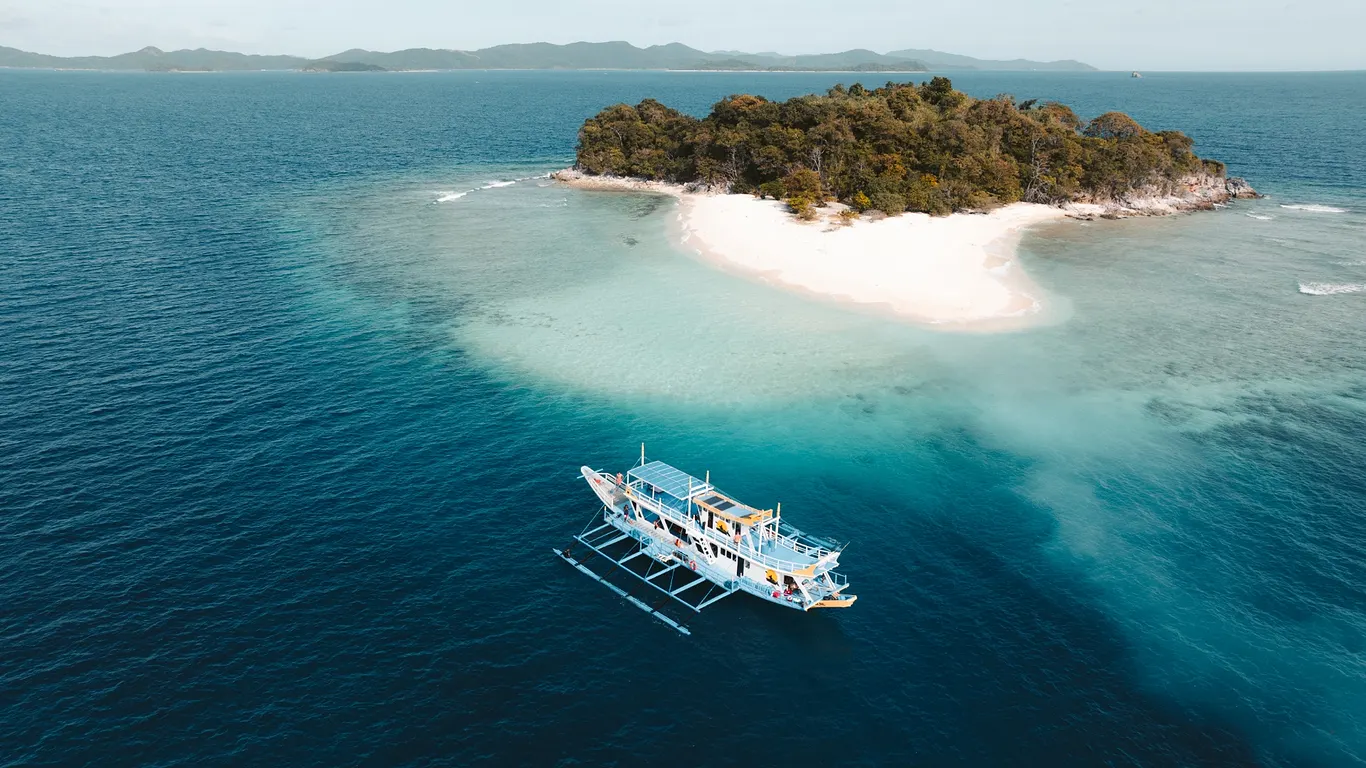
Coron. Lakes between cliffs, wrecks beneath waves.
Kayangan, Barracuda, Twin Lagoon — freshwater karst lakes nested inside vertical limestone walls. Below the surface, half a Japanese fleet sleeps from World War II. Above it, outer islands with powder beaches you'll have to yourself.
Coron is a municipality on Busuanga Island in northern Palawan. Fly into Francisco B. Reyes Airport (USU), then join our Coron to El Nido expedition — three days of islands and Linapacan camps ending near El Nido. The name covers three different worlds: the karst islands of Coron Island with their hidden lakes; the World War II shipwrecks of Coron Bay; and the outer islands with empty white-sand beaches.
The three faces of Coron
Coron Town (Brgy. Poblacion)
The base for all tours. Compact, friendly, full of restaurants and dive shops. The market starts at 4 AM. Climb the 700-step Mt. Tapyas at sunset for a panoramic view over Coron Bay and the karst islands offshore.
Coron Island (the karst island with the lakes)
Despite the name, the main town is not on Coron Island. The island itself is a 30-minute boat ride south — a wall of limestone karst rising vertically from the sea, home to the Tagbanua indigenous community who hold ancestral rights. This is where the famous lakes are.
Outer islands & sandbars
An hour or more by boat south and west of Coron Town. Less karst drama, more pure castaway beach. Malcapuya, Banol, Bulog Dos, Pass Island, and the Bulalacao sandbar are the highlights.
What to see in Coron
- Kayangan Lake — the most photographed spot in the Philippines. A short jungle stair climbs over a karst ridge into a freshwater lake of impossible turquoise. Arrive at opening (≈ 8 AM) to have it close to empty.
- Twin Lagoon — two emerald-green lagoons connected by a tunnel you swim through at low tide.
- Barracuda Lake — a famous freedive and tech-dive site. Halocline at ≈ 14 m where the water suddenly warms to 38°C. Eerie and unforgettable.
- Siete Pecados Marine Park — easy reef snorkel just outside Coron Bay.
- Skeleton Wreck — a small Japanese ship at snorkellable depth (5–25 m). Accessible to non-divers.
- Wreck diving (Olympia Maru, Akitsushima, Irako, Kogyo Maru) — full Japanese supply fleet sunk in September 1944. Mostly 25–40 m, intermediate to technical depth.
- Banol Beach — sliver of sand under a karst wall, classic lunch beach.
- Malcapuya Island — long curve of soft white sand, fine reef offshore.
- Bulog Dos / Two Seasons Island — postcard sandbar between two islets.
- Pass Island — pristine outer island with rich snorkelling.
- Maquinit Hot Springs — natural saltwater hot springs, perfect after a long sea day.
When to visit Coron
- Dry season (Nov–May) — calm seas, clear water, predictable sun. Peak demand December–April. Book accommodation and tours 4–8 weeks ahead.
- Green season (Jun–Oct) — Coron generally gets less rainfall than El Nido. Lower prices, fewer travellers, still many beautiful sunny days. Watch typhoon track in August–September.
- Best months — March, April, May (heat starts climbing in May), and late November.
How to get to Coron
- Fly direct — Cebu Pacific, Philippine Airlines, and AirSWIFT fly Manila and Cebu to Francisco B. Reyes Airport (USU), also called Busuanga Airport. ≈ 60 minutes from Manila. Airport is a 45-minute van transfer to Coron Town.
- Ferry from El Nido — 2GO / Montenegro fast ferries run on most days, 4–5 hours. Subject to weather cancellation.
- Island expedition from El Nido — the scenic three-day crossing via the Linapacan archipelago: 3 Days 2 Nights El Nido to Coron Expedition.
What it costs
- Accommodation — hostels ₱500–1,000, mid-range hotels ₱2,000–5,000, boutique ₱7,000+, resort islands ₱20,000+
- Joiner boat tours — ₱1,500–2,500 per person
- Wreck dive (2 tanks) — ₱4,500–6,500 depending on depth and shop
- Kayangan / Barracuda lake entrance — ₱300 per person each (Tagbanua community fee)
- Tricycle — ₱20–80 around town
Tours that include Coron
3 Days 2 Nights El Nido ↔ Coron
The iconic island-to-island speedboat expedition. Three days, two overnight beach camps, the full Linapacan archipelago route between El Nido and Coron.
Read the route →Premium Private Charter
Custom private speedboat day from El Nido. Combine with a fly-out from Busuanga for a curated multi-region itinerary.
Plan a day →Coron travel FAQs
What is Coron famous for?
Coron is famous for three things: dramatic karst lakes (Kayangan Lake and Barracuda Lake nestled between vertical limestone cliffs), World War II Japanese shipwreck diving in Coron Bay (one of the world's top wreck dive sites), and pristine outer islands with powder-white beaches like Malcapuya, Banol, and Bulog Dos.
How do I get to Coron?
Fly into Francisco B. Reyes Airport (USU/IATA, also called Busuanga Airport). Multiple daily flights from Manila and several from Cebu, ≈ 60 minutes. The airport is a 45-minute van transfer to Coron Town. Alternatively, arrive by ferry from El Nido (4–5 hours) or by our 3 Days 2 Nights El Nido to Coron Expedition via the Linapacan archipelago.
Coron or El Nido — which is better?
They complement each other. Coron's strength is its dramatic freshwater karst lakes, world-class shipwreck diving, and clearer underwater visibility. El Nido's strength is its hidden lagoons, secret beaches, and sheer density of karst islands in one bay. Most travellers who can spare a week visit both, often via our scenic 3-day island crossing.
When is the best time to visit Coron?
November through May is dry season with the calmest seas. December to April is peak. May and early June often have excellent weather with fewer travellers. Coron generally gets less rainfall than El Nido even in green season, making it a strong shoulder-season choice.
How many days do you need in Coron?
Three full days lets you cover the inner-island classic tour (Kayangan, Twin Lagoon, Siete Pecados), the outer-island tour (Malcapuya, Banol, Bulog Dos), and either a wreck-diving day or a Pass Island sandbar day. Five days adds buffer for weather and lets you do both diving and snorkelling tours.
Where to next
- El Nido travel guide — Bacuit Bay, secret lagoons, and how to plan a 3-day stay.
- 3D2N El Nido to Coron Expedition — the scenic crossing between the two.
- About Sea Tours Palawan — who we are and why we operate this way.